
Criminal Cases in the Storey County Courts
Storey County uses a two-court chain. Virginia Township Justice Court starts every criminal prosecution brought by the District Attorney or Attorney General through a complaint or citation. It resolves misdemeanors, including misdemeanor traffic matters, and conducts the early proceedings for felonies and gross misdemeanors. Those serious cases may then move to the First Judicial District Court. The District Court has general jurisdiction, conducts jury or bench trials, and hears Justice Court appeals. Its First Judicial District also serves Carson City, so hearing coordination can involve judges' chambers there even though the Storey County file is maintained locally.
The court and its clerk are separate from the Sheriff's incident and jail booking records. The Justice Court is at 800 South C Street in Virginia City and can be reached at 775-847-0962. The Storey County Clerk serves as District Court clerk at 26 South B Street, Drawer D, Virginia City, and answers at 775-847-0969 or clerk@storeycounty.org. Start with the Justice Court when the case level is not known. Ask whether it remains there, was transferred, is archived, or is sealed.
Storey County Criminal Cases Start Here
A felony arrest does not mean the first public court entry will be at District Court. In Storey County, the complaint, initial hearing, and probable-cause work begin at Virginia Township Justice Court. The court can carry a misdemeanor to disposition, but it conducts only the preliminary part of a felony or gross-misdemeanor case. This division explains why one name may require inquiries at both C Street and B Street. It also prevents a common error: treating an empty District Court response as proof that no case was filed.
The official Justice Court Criminal Division page describes criminal complaints, arraignment, and the risk of a warrant after failure to appear. Its captured interface shows the local starting point for filed charges.
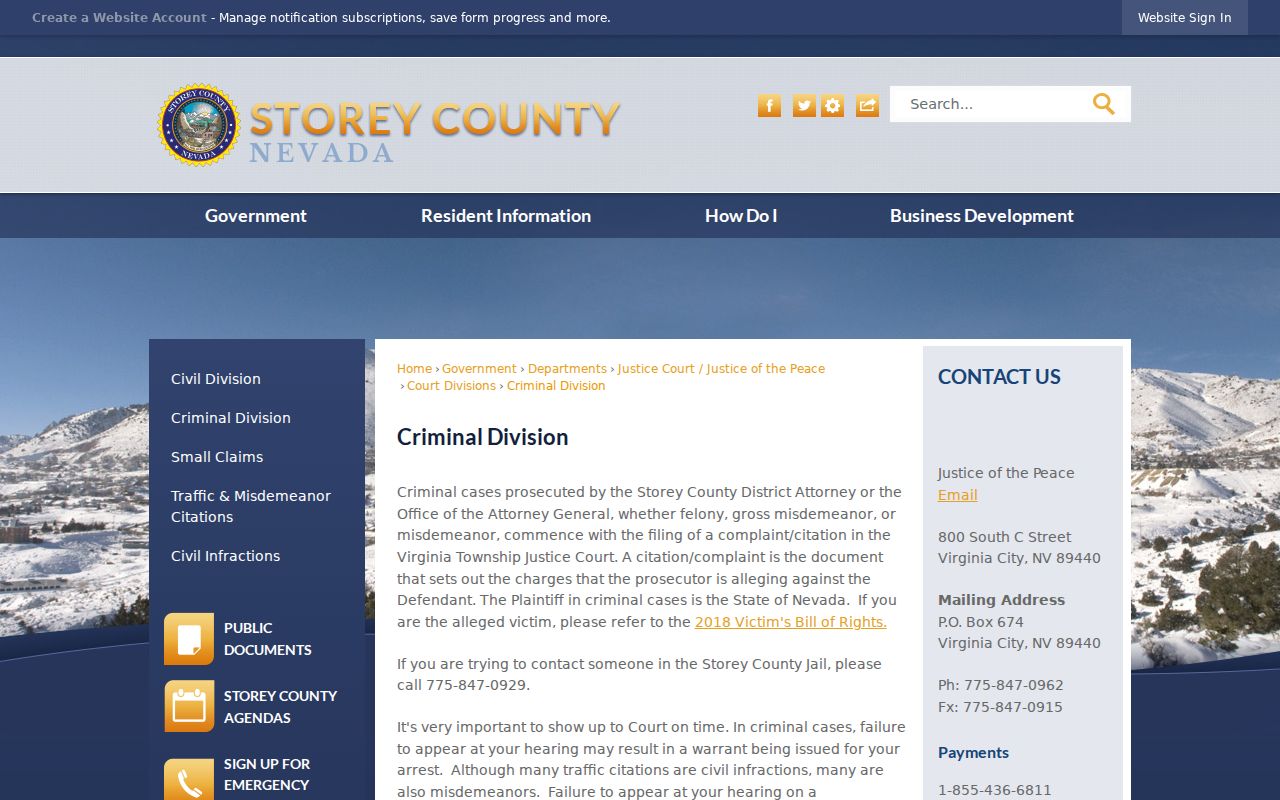
The image helps distinguish the court's complaint and arraignment record from the allegation recorded during arrest or booking.
How to Search Case Records
There is no statewide Nevada trial-court portal and no Storey County public docket display. A direct clerk inquiry is the main search channel. Use the most exact identifiers available, but do not send protected personal numbers. The court may need a full name, approximate filing or arrest date, citation or complaint number, or known case number. The inquiry should also identify the document sought, such as the docket, charging instrument, disposition, judgment, sentence, warrant entry, or a certified copy.
- Call Virginia Township Justice Court first when the charge level or stage is uncertain. Ask whether the case is active, disposed, transferred, archived, or sealed.
- Give the clerk a full name and an approximate date. Add the case, citation, or complaint number when known.
- Ask for the docket and filed charging document, then identify the entries or orders needed rather than requesting a new summary.
- If the matter advanced, repeat the inquiry with the Storey County District Clerk and request the District Court case index and disposition.
- Confirm inspection, copy, certification, retrieval, mail, and payment terms before sending a request. No local court fee schedule was found in the official material.
These are inquiry fields, not claimed online portal controls, because Storey County publishes no local court-search interface.
| Field or Detail | Type | Use | Format Note |
|---|---|---|---|
| Full name | Text | Primary index clue | Include known spelling or alias variation |
| Case or citation number | Text | Best direct match | Ask each clerk about its format |
| Approximate date | Date range | Narrows the manual search | Use filing, citation, or arrest period |
| Court and case level | Selection | Routes the request | Justice Court first if uncertain |
| Document requested | Text | Defines the response | Docket, judgment, sentence, or certified copy |
The Justice Court filing and payment page shows the separate court channel used at 800 South C Street.
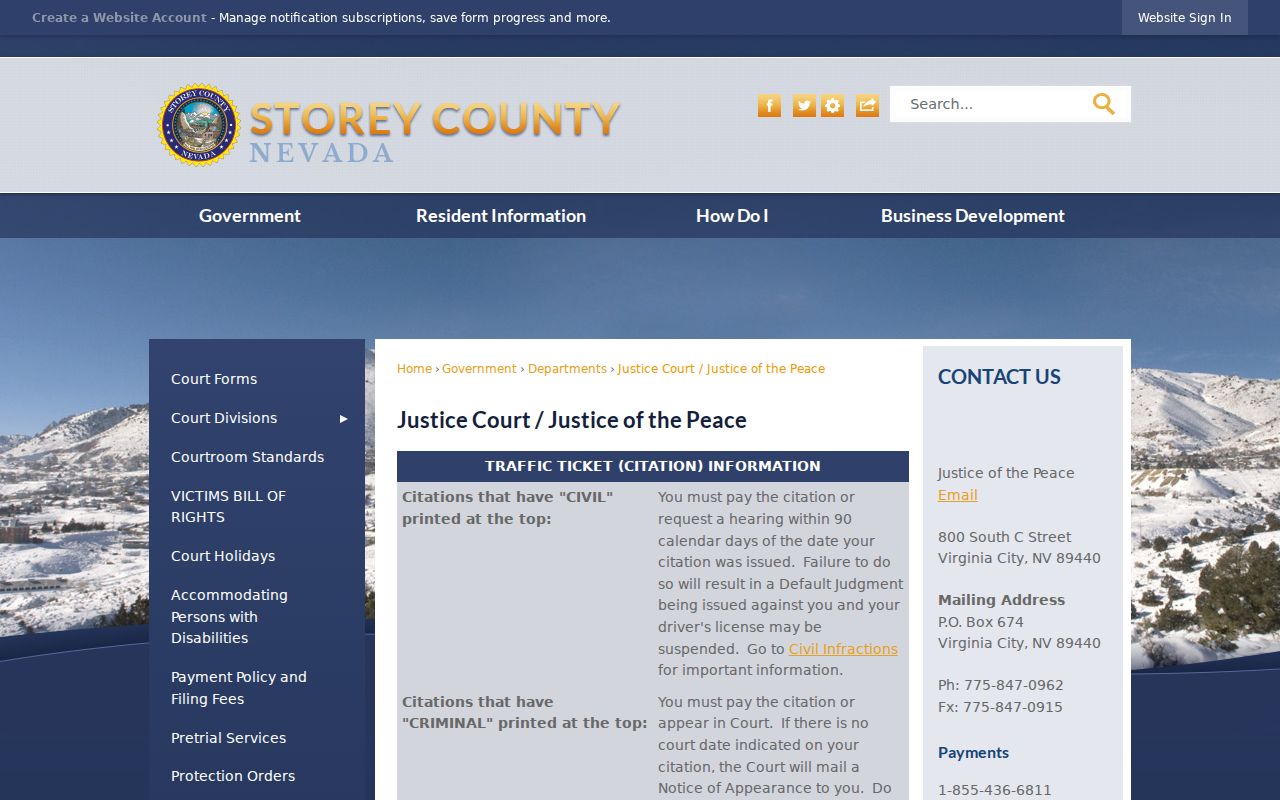
The page supports filing and payment tasks, but it is not a public Storey County criminal case search portal.
Storey County Case Requests Without a Portal
Signed filings cannot be submitted online to Virginia Township Justice Court. They must be delivered in person or sent by mail. This is more than an e-filing detail. It means a citation-payment vendor should never be mistaken for a public case index, and a payment receipt should not be treated as the complete court file. Call the clerk before mailing a signed document or copy request. Public payment hours end at 4:30 p.m., while the court lists general weekday hours through 5:00 p.m.
The county public-record form is also the wrong channel for records about one's own court case. Storey County directs those requests to the court itself. The court clerk can explain inspection, archived retrieval, redaction, copies, and certification. Staff do not have to create a new analysis from raw records, so request identifiable existing items. An older case may sit outside a current working index, while a sealed case may be withheld from ordinary access.
The Storey County Clerk page was assigned to this subject, but its manifest capture failed. No image is substituted because failed assets cannot be used.
What the Case File Shows
A Storey County case file tracks the prosecution rather than the jail stay. Its docket is the chronological register of filed papers, hearings, orders, and rulings. The complaint or citation opens the local matter. A serious case may later include an information or indictment, while the file can also hold bond orders, motions, a plea, trial events, a judgment, sentence terms, financial assessments, warrant entries, and a linked appeal. Because no public sample display exists, the table describes fields to ask for, not promised web fields.
| Case Number & Court | Identifies the court, division, and clerk that controls the file. |
|---|---|
| Charging Document | Shows the complaint, citation, information, or indictment and each filed count. |
| Docket Entries | Lists filings, hearings, motions, orders, plea events, and status changes by date. |
| Bond & Warrants | May show release terms, bond orders, a bench warrant, or later recall. |
| Disposition & Judgment | States the outcome of each count, including conviction, acquittal, or dismissal. |
| Sentence & Conditions | Records custody, probation, restitution, financial terms, and other court orders. |
A custody release is not a dismissal. Likewise, a pending label means the court has not recorded a final resolution, while disposed means a court-level outcome exists.
Read Storey County Dispositions by Charge
Read every count on its own. Charges stated at booking can be changed before filing. Filed charges can then be amended, dismissed, tried, or resolved by plea. A guilty result on one count does not convert all initial allegations into convictions. The judgment and disposition entries are the best sources for the final court result, while the docket explains how the matter reached that point.
Several terms are easy to confuse. A dismissal ends a charge without a conviction. An acquittal is a not-guilty determination after adjudication. A disposition is the court's outcome for a charge or case. A bench warrant is a judge's command for custody, often tied to failure to appear or comply. If the record shows only a complaint and future hearing, it should not be described as a conviction. For a broader view of the difference between an arrest allegation and the later case, consult the Storey County arrest history material.
The Storey County District Attorney page identifies the prosecuting office and its victim-advocate contacts.
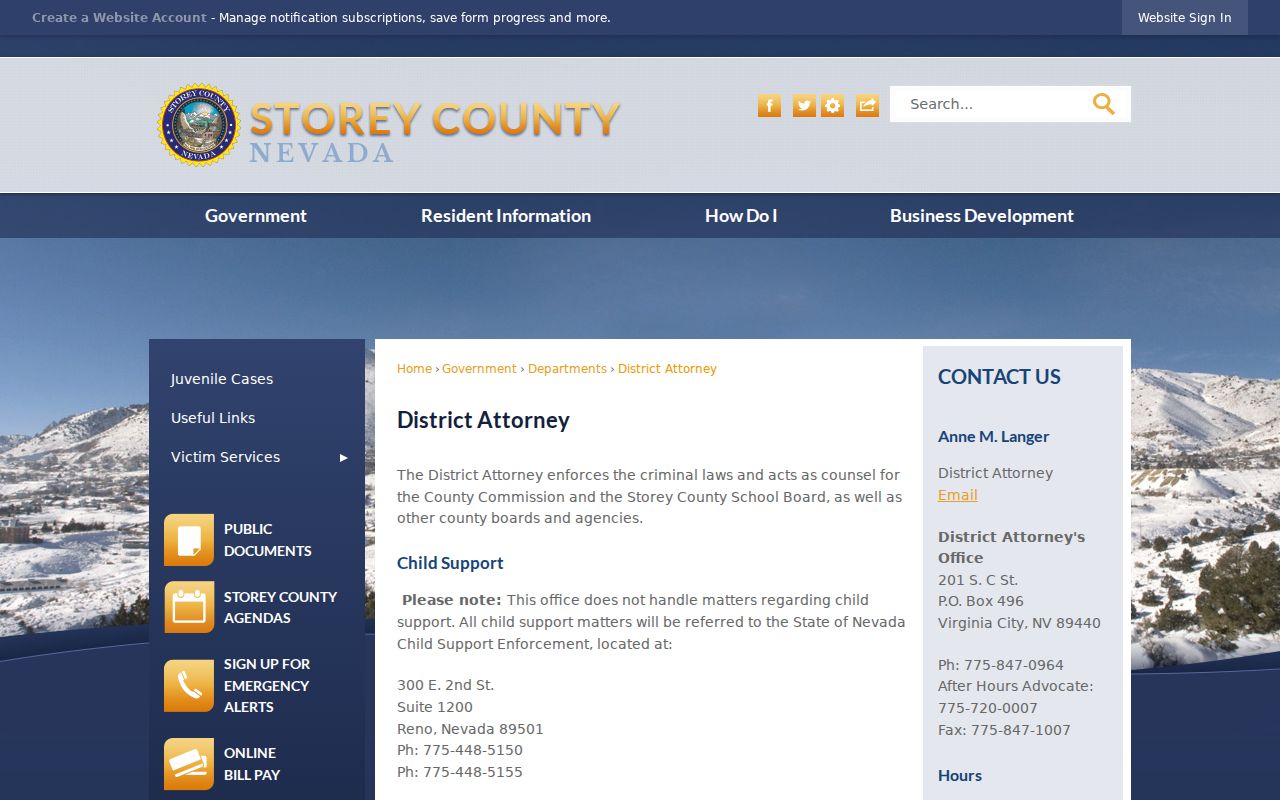
The prosecutor's office handles the State's side of a case; the Justice Court or District Clerk remains the record custodian for the filed court case.
Stages of a Criminal Case
Local criminal procedure begins when a complaint or citation is filed in Justice Court. Arraignment addresses the charge, rights, and plea. Pretrial work can include release orders, discovery, motions, and negotiation. A misdemeanor can proceed to plea or trial and disposition in that court. For a felony or gross misdemeanor, preliminary proceedings determine whether the serious matter moves to District Court for later pleading, trial, judgment, and sentence. A court appeal creates a separate appellate record rather than replacing the trial file.
Case flow: Charges Filed › Arraignment › Pretrial › Plea or Trial › Disposition › Sentencing
Note: Wednesday is the published misdemeanor arraignment day, but the clerk should confirm the current calendar before any planned appearance.
Storey County Appellate and Federal Cases
Nevada's Supreme Court and Court of Appeals portals cover appellate matters only. They do not search the underlying Storey County trial docket. The Nevada Supreme Court public case portal accepts party or docket-based appellate inquiries.
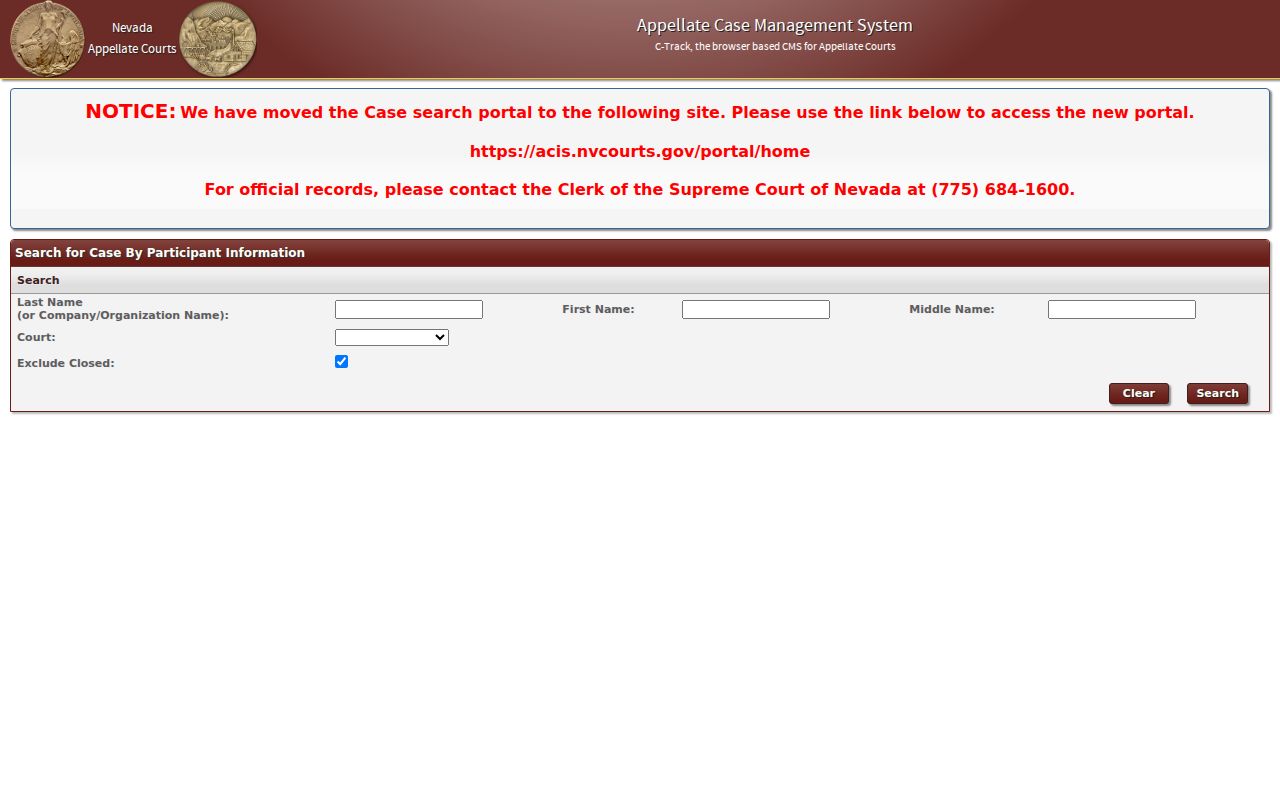
The captured portal is useful only after a Storey County case reaches the Nevada Supreme Court; the Justice or District clerk remains the source for trial documents.
Federal charges use a different system. Storey County lies within the U.S. District Court for the District of Nevada, and a federal case will not appear in the local clerk's index merely because the conduct occurred in the county. PACER is the official federal docket and filed-document gateway, with registration and current fees set by the federal judiciary.
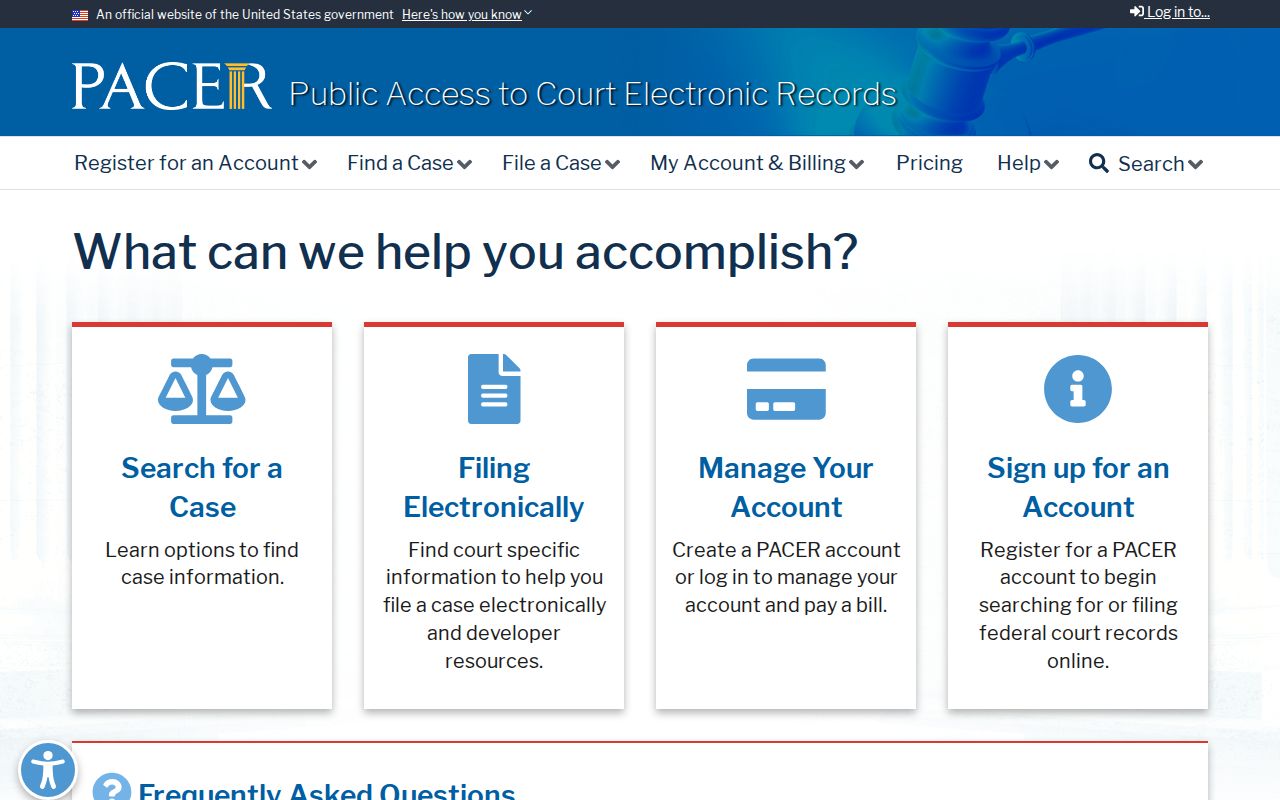
This federal interface belongs at the end of the jurisdiction check, after deciding that the record is federal rather than a Storey County court file.
Access & Restrictions
Nevada Public Records Law generally opens government records unless another law makes them confidential. Court files, however, go through the court clerk and applicable court rules, not the county's general agency-request form. NRS Chapter 179A limits dissemination of criminal-history information. Nevada's sealing statutes and the Rules for Sealing and Redacting Court Records can remove qualifying files from ordinary public access.
Victim and minor information, personal identifiers, medical material, juvenile files, sealed content, and other legally protected information may be withheld or redacted. An online or index gap can also reflect an archive, spelling variation, transfer to the other court, or a pending update. Ask the clerk which explanation applies. Under NRS 179.245 and 179.255, eligible convictions and matters ending in dismissal, declination, or acquittal may qualify for sealing. A sealing order limits normal access but does not promise instant removal of every authorized government copy.
Storey County Court Counter Rules
The historic Storey County Courthouse holds the Clerk/Treasurer's second-floor public counter. Its published weekday hours are 8:00 a.m. to 5:00 p.m. The separate Justice Court tells visitors to arrive 15 minutes early and check in. It bars weapons and all bags, including purses, backpacks, totes, and diaper bags. Staff do not store those items. Only the Justice Court's explicit rule is verified, so do not assume the historic courthouse has the same screening procedure.
The official courtroom standards give the clearest pre-visit rules for a Storey County court appearance or file inquiry.
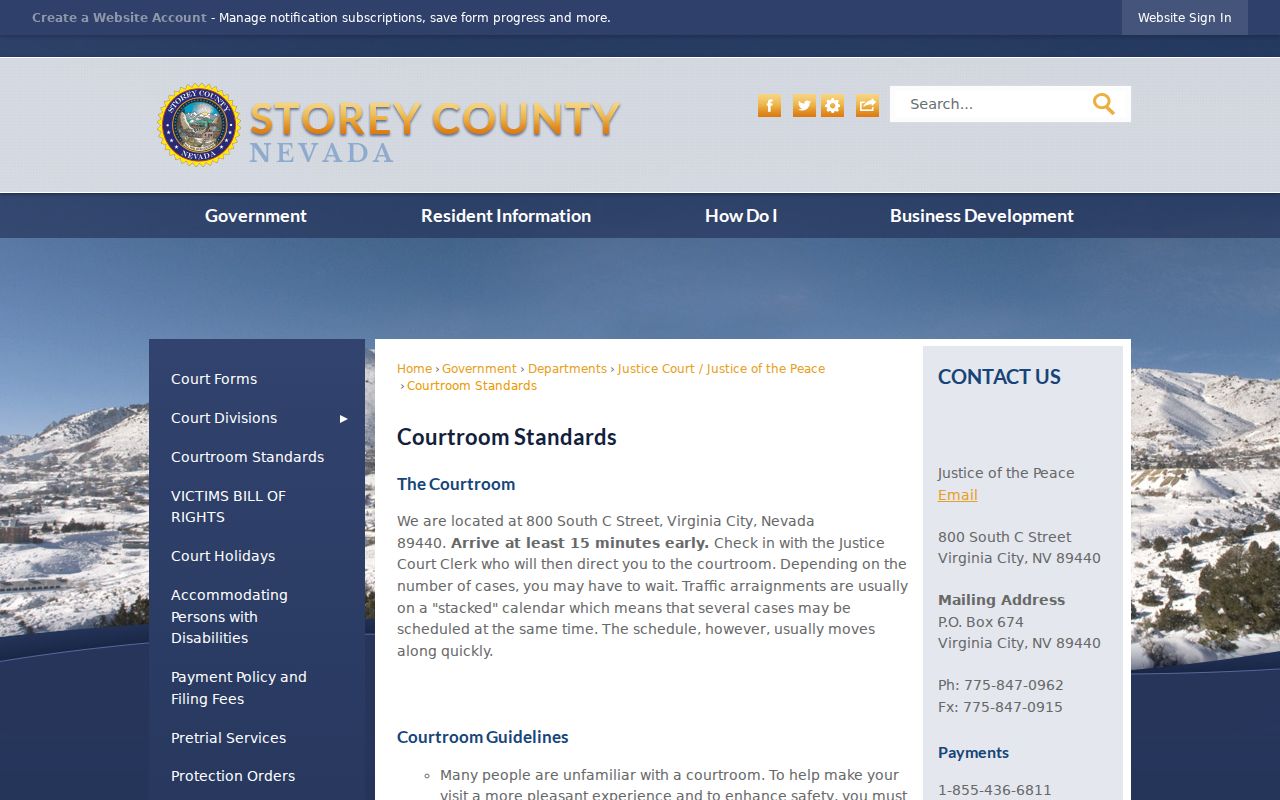
This captured page reinforces a practical point: arrive ready to check in without a bag, and call the clerk before bringing any item not covered by the posted rules.