
Arrest History in Storey County
The Storey County Sheriff's Office is the principal local arresting agency. Nevada State Police and federal or other authorized agencies may also make arrests. Storey County has no incorporated cities and no city police departments. Virginia City is an unincorporated county seat, while Lockwood and the Tahoe-Reno Industrial Center also receive county Sheriff service. An arrest made at TRIC does not route to a made-up municipal police department. It remains within county and state systems.
Arrest history is not one document. The arresting deputy may create an incident and probable-cause report. The Storey County Detention Center creates a distinct booking record if the person enters county custody. Fingerprints may link the arrest cycle to Nevada's Central Repository. Virginia Township Justice Court then records the complaint or citation, and a serious matter may later reach District Court. Each record answers a different question, and no single local web screen combines them.
Four Storey County Arrest Records
The paper trail usually begins at the scene and grows after custody. First, the arresting agency documents the event, legal basis, alleged offenses, and transport. Second, detention staff record identity, fingerprints, property, charge-at-intake, bond, holds, and custody status. Third, the fingerprint transaction can become part of the Nevada State Police RCCD criminal-history system. Fourth, the complaint or citation starts the court record. Prosecutor decisions, hearings, pleas, dismissals, judgment, and sentence appear in that court file.
Record flow: Arrest Report › Detention Booking › RCCD Fingerprint Cycle › Justice Court Case › District Court if Transferred
The official Virginia Township Criminal Division page shows where local complaints, misdemeanor arraignments, and failure-to-appear issues enter the court system.
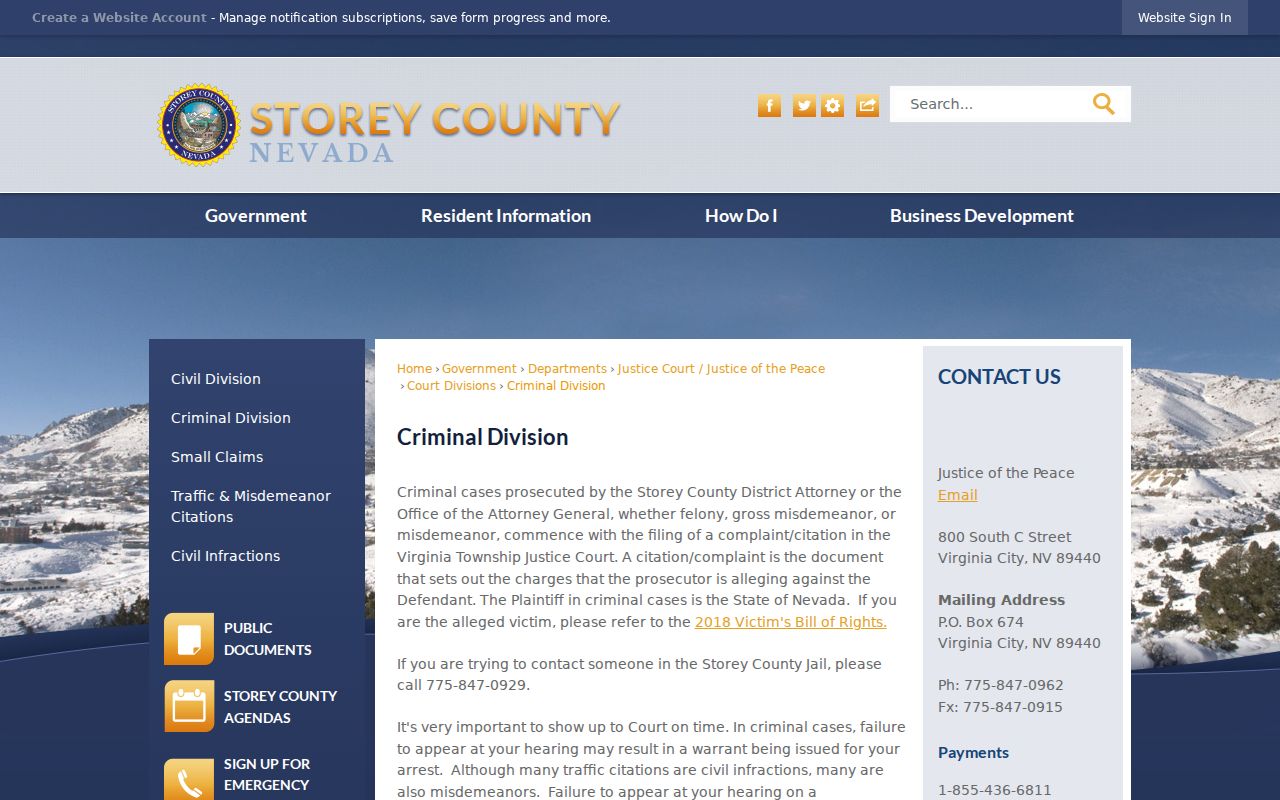
This court interface is the bridge from an arrest allegation to the charge actually filed, but it is not a booking log.
How to Look Up Storey County Arrests
The official path begins by deciding whether the immediate need is current custody, an agency report, a filed case, a statewide self-review, or later prison custody. Storey County provides direct phone and counter channels plus a formal web request. It does not publish a jail roster, booking log, warrant search, or local court index. A missing web result is therefore expected and is never proof that no arrest occurred.
- Call the Storey County Detention Center at 775-847-0929 for current custody. Give a full name and approximate date, then ask for the booking identifier, arresting agency, court, bond channel, and public release status.
- Call the Sheriff's Main Office at 775-847-0959 for the incident or arrest-report process. Use an incident number, date, location, and involved name to identify an existing record.
- Contact Virginia Township Justice Court at 775-847-0962 for the complaint, arraignment, bond or warrant entry, and misdemeanor outcome. Call the District Clerk at 775-847-0969 if the serious case advanced.
- Use the county's NRS 239 form when a direct Sheriff request needs a formal written channel. Choose the likely custodian and describe the existing record instead of asking staff to research a question.
- For one's own statewide fingerprint-supported record, follow the Nevada State Police RCCD request process. For a Nevada prison commitment, search NDOC by Offender ID or name.
- Contact the arresting division for a Nevada State Police arrest or the named federal agency for a federal arrest. Local Sheriff files may exist only when the agencies jointly created a record.
Note: Do not appear without notice to check an active warrant; call the issuing court and obtain guidance about clearance or surrender.
No Storey County Arrest Booking Log
No official Storey County online roster, blotter, automated custody line, or booking-photo gallery was found. The sound fallback is a call to detention, followed by Sheriff records and the appropriate court. Current custody can change quickly. Ask detention staff to confirm the status at the time of the call and the court of jurisdiction. For case status, ask the court rather than jail staff. A release from jail says nothing by itself about whether prosecutors dismissed a case.
The Storey County public-record request form is the written fallback for an identifiable Sheriff or booking record.
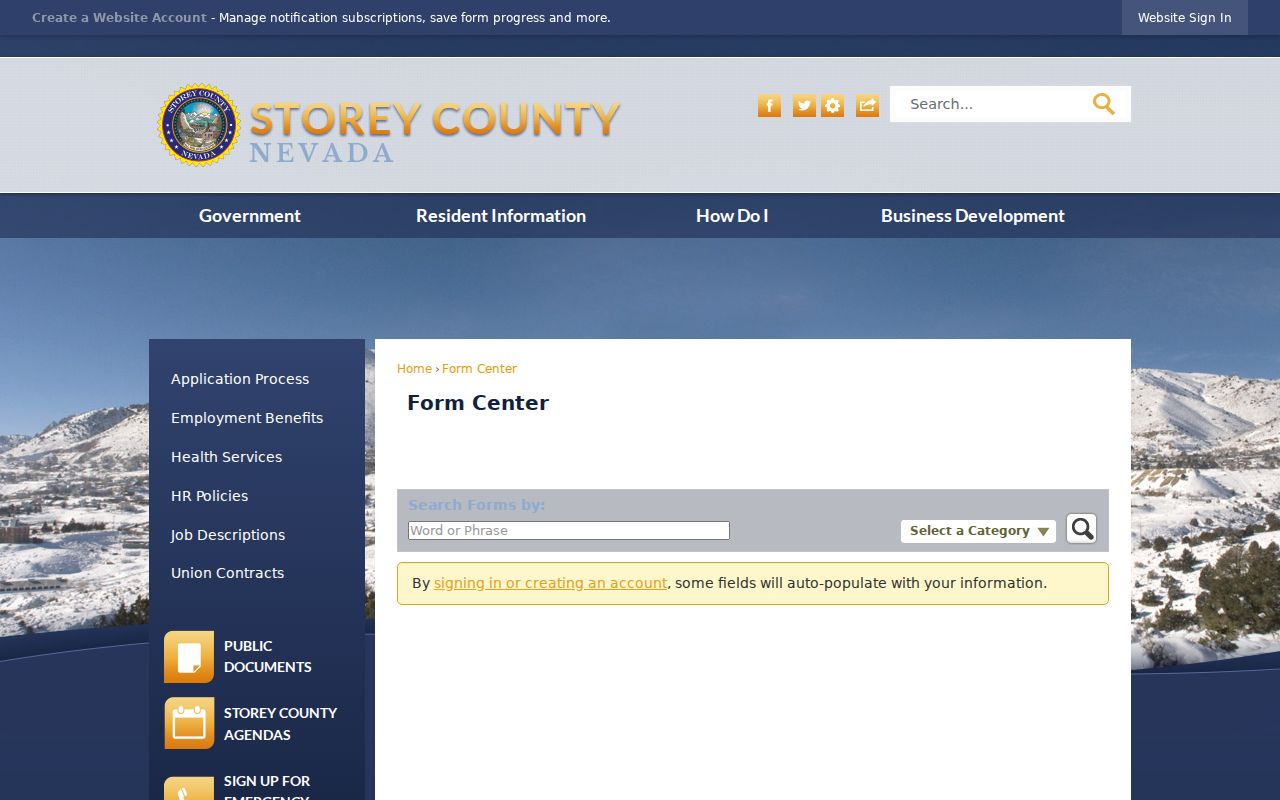
The form is best used with a narrow date range, involved name, department, incident number if known, and a clear description of the retained record sought.
Because the submission travels by email, the county warns against entering Social Security, driver-license, passport, medical, tax, password, banking, routing, or card information. Redaction or legal review can add time. The custodian need not create a custom summary or reorganize data to answer a broad question. Court records about one's own case must go directly to the clerk, not through this county form.
What an Arrest Record Shows
An agency report and a booking record overlap, but they are not the same. The Sheriff's report may contain an incident number, arrest time and location, arresting officer, probable-cause narrative, alleged offenses, warrant basis, evidence, witness information, and transport destination. The jail booking file is built around intake and custody. Some fields, especially medical screening, victim data, juvenile details, protected identifiers, and active-investigation material, may be withheld or redacted.
| Incident or Booking Number | Identifies the agency event or the separate detention intake. |
|---|---|
| Arrest and Booking Time | Shows when custody began and when detention intake was recorded. |
| Arresting Agency | Names the Sheriff, Nevada State Police, federal agency, or other lawful arresting body. |
| Charges at Intake | Lists allegations presented at booking, which may differ from filed court charges. |
| Bond and Holds | May show the recorded bond channel, warrant, or other custody hold. |
| Booking Photograph | Created during intake, but no official Storey County public photo portal was found. |
| Custody or Release | Shows jail status, not whether the criminal case was dismissed or resolved. |
The Storey County jail has 25 adult beds and a separate isolation or observation cell. Juveniles are housed at Carson City's juvenile facility, so their confidential files should not be expected in a public Storey booking result.
Storey County Arrest Reports Versus Bookings
The Sheriff's Main Office at 205 South C Street is the first contact for incident, arrest, warrant, fingerprint, and other local law-enforcement records. The Detention Center at 911 State Route 341 holds current-custody and booking information. Call 775-847-0959 for the agency report process and 775-847-0929 for detention. Storey County does not advertise a separately branded records division or a Sheriff report-copy fee, so ask for the current request, identity, redaction, estimate, delivery, and certification rules.
Storey County Sheriff's Main Office
205 South C Street
Virginia City, NV 89440
775-847-0959
Incident, arrest, warrant, fingerprint, and agency-record inquiries.
Storey County Detention Center
911 State Route 341
Virginia City, NV 89440
775-847-0929
Current custody, booking identifier, bond channel, and release information.
The two offices may refer to the same event but maintain different products. Request the agency narrative from the Sheriff. Ask detention for the booking and current custody. Ask the court for the filed charge and result.
Recent Arrests and Booking Logs
Without an official Storey County roster, recent-arrest research depends on direct confirmation. Call detention with a name and approximate date. If the person is not in current custody, ask whether staff can release a booking identifier or direct the requester to a retained-record process. Then ask Sheriff records for the arrest or incident report and Justice Court for the complaint. This chain is stronger than any third-party page because each source controls a distinct official record.
Even where another county publishes a roster, a booking log is usually a short window into custody, not a complete arrest history. Entries can disappear after release. A person may be cited without jail intake, transferred, booked by another agency, or held in a different jurisdiction. Storey County's lack of a roster makes the limitation plain. It does not justify using a mugshot aggregator or republishing names and photos.
Bail can be posted by approved means listed by the county, including U.S. currency in person, a qualifying certified or cashier's check, a stamped and typed postal money order, or an accepted bail agent unless the order is cash-only. The county estimates release at one to four hours after bail posts. Confirm the order and acceptable payment with the responsible office before travel.
TRIC Arrests Route Through Storey County
The Tahoe-Reno Industrial Center is not a city-police jurisdiction. Storey County deputies serve it from the TRIC substation at 1705 Peru Drive in McCarran. The Sheriff's January 2025 operations report said seven fully outfitted deputies were assigned there under a government-services agreement with Tesla. That staffing fact explains the local route. It does not create a separate arrest-record custodian.
For an arrest at TRIC, begin with the Storey County Sheriff's Office and detention center. Then check Virginia Township Justice Court because all local prosecutions start there. If felony or gross-misdemeanor proceedings advance, contact the District Clerk. A Nevada State Police stop at or near the industrial center should be requested from the relevant state division, though related jail and court records can still exist in Storey County.
Arrests vs Convictions
An arrest records government action and an allegation. A conviction records a court judgment of guilt. Different custodians create the two, and their language can diverge as prosecutors amend or dismiss counts. The court file is the right source for the disposition. The RCCD history may group a fingerprint-linked arrest cycle with reported outcomes, but reporting delay or an incomplete disposition can still require correction at the source.
| Arrest Record | Conviction Record |
|---|---|
| Created by the arresting agency and detention staff | Created by the Justice or District Court |
| Shows custody, probable cause, and allegations | Shows a judgment of guilt on a specific count |
| Lives with the Sheriff, jail, and reported RCCD cycle | Lives in the clerk's case file and reported Repository history |
| Can be followed by release, no filing, dismissal, or acquittal | Can lead to sentence, appeal, or eligible Nevada sealing |
Note: An arrest is not proof of guilt, and a booking allegation can change or end without a conviction.
When a final court result is needed, follow the arrest into the Storey County criminal court case file and read every count separately.
Storey County Arrest Records in Prison
A county-jail inquiry ends when the question becomes Nevada prison custody. The NDOC Inmate Search accepts an Offender ID or first and last name, supports the percent sign as a wildcard, and offers Demographic, Alias, Booking, Parole, and Release downloads.
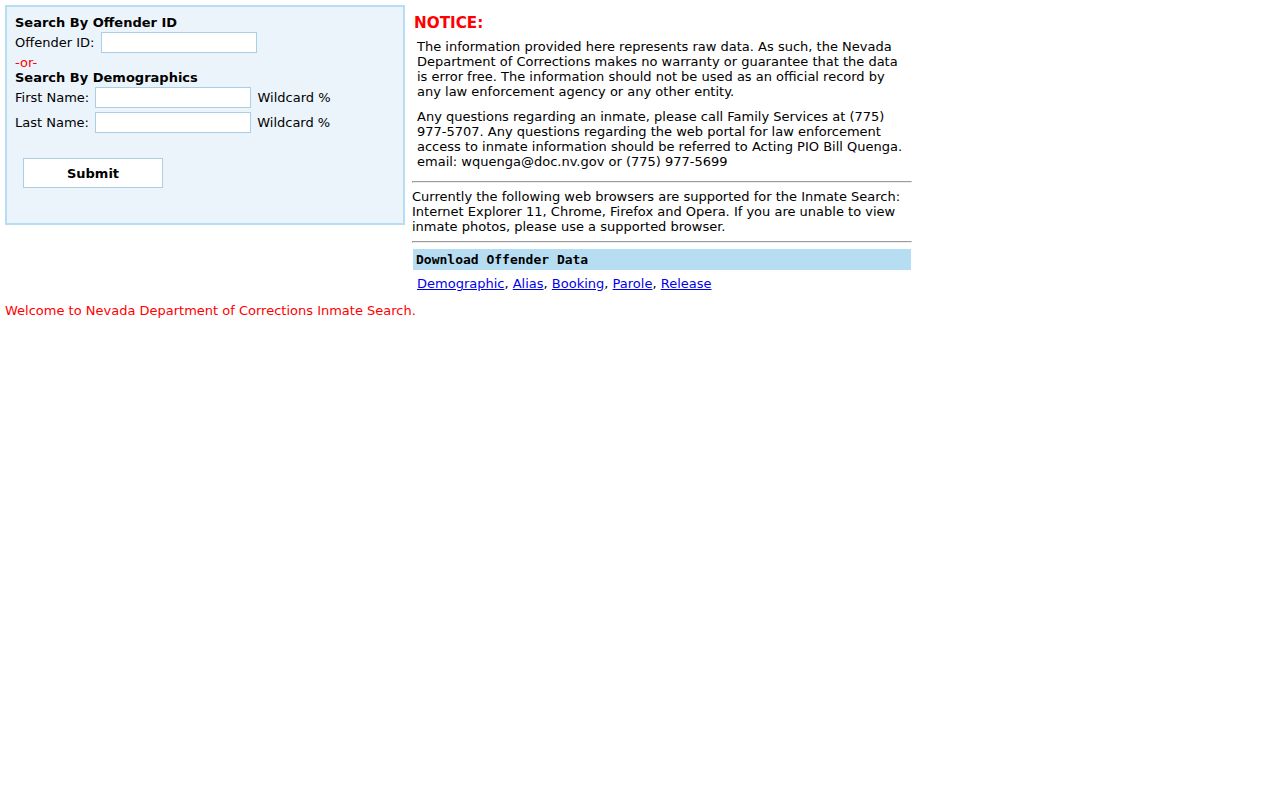
The NDOC image shows state-prison search fields, not Storey County jail custody or a full court history.
For one's own Nevada history, RCCD provides a fingerprint-supported subject-of-record request under NRS Chapter 179A. The general public cannot run an unrestricted instant Nevada rap-sheet name search. If an RCCD entry is wrong, first obtain the record, collect correction proof from the originating Sheriff or court, and use RCCD's formal challenge channel. Nevada sealing under NRS 179.255 may restrict an eligible arrest and case after dismissal, prosecutor declination, or acquittal.
Storey County Arrests and Federal Custody
Federal custody is another distinct route. The official Federal Bureau of Prisons Inmate Locator covers federal imprisonment rather than the Storey jail or NDOC.
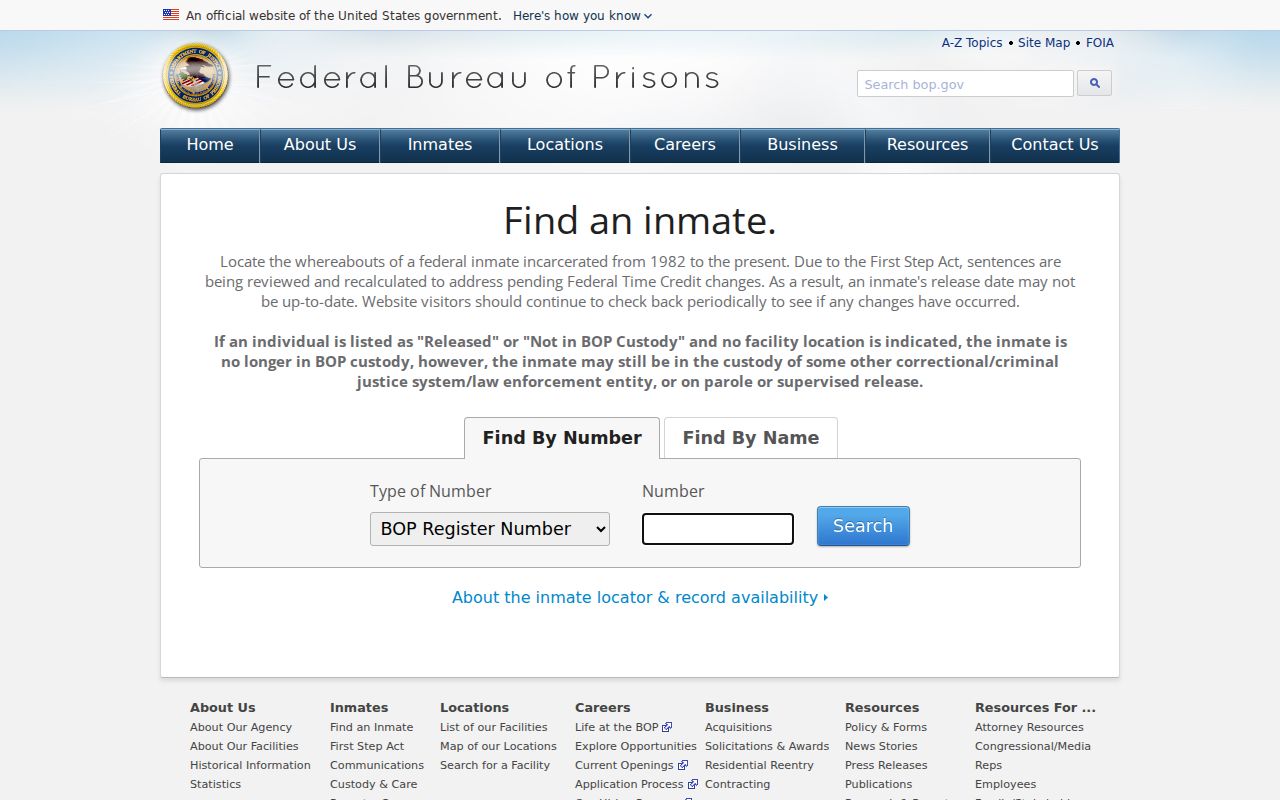
This search becomes relevant only when the case led to federal custody; it does not confirm the local arrest report or its disposition.
Storey County Arrest Self-Review
For one's own nationwide identity history held by the FBI, use the FBI electronic Identity History Summary channel. It requires identity and fingerprint steps and is not a public name search.
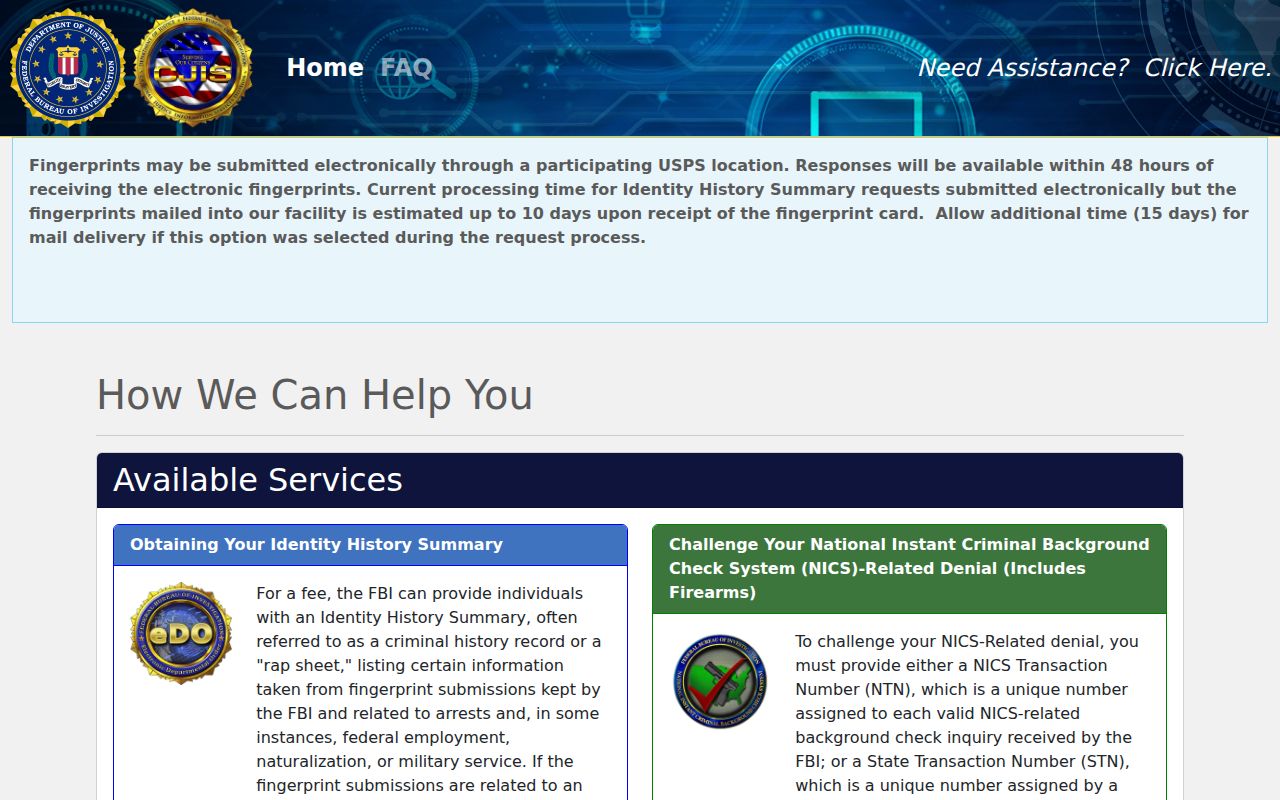
The federal self-review can complement, but never replace, the Sheriff report, Storey booking record, or local court disposition.